We Look Properly
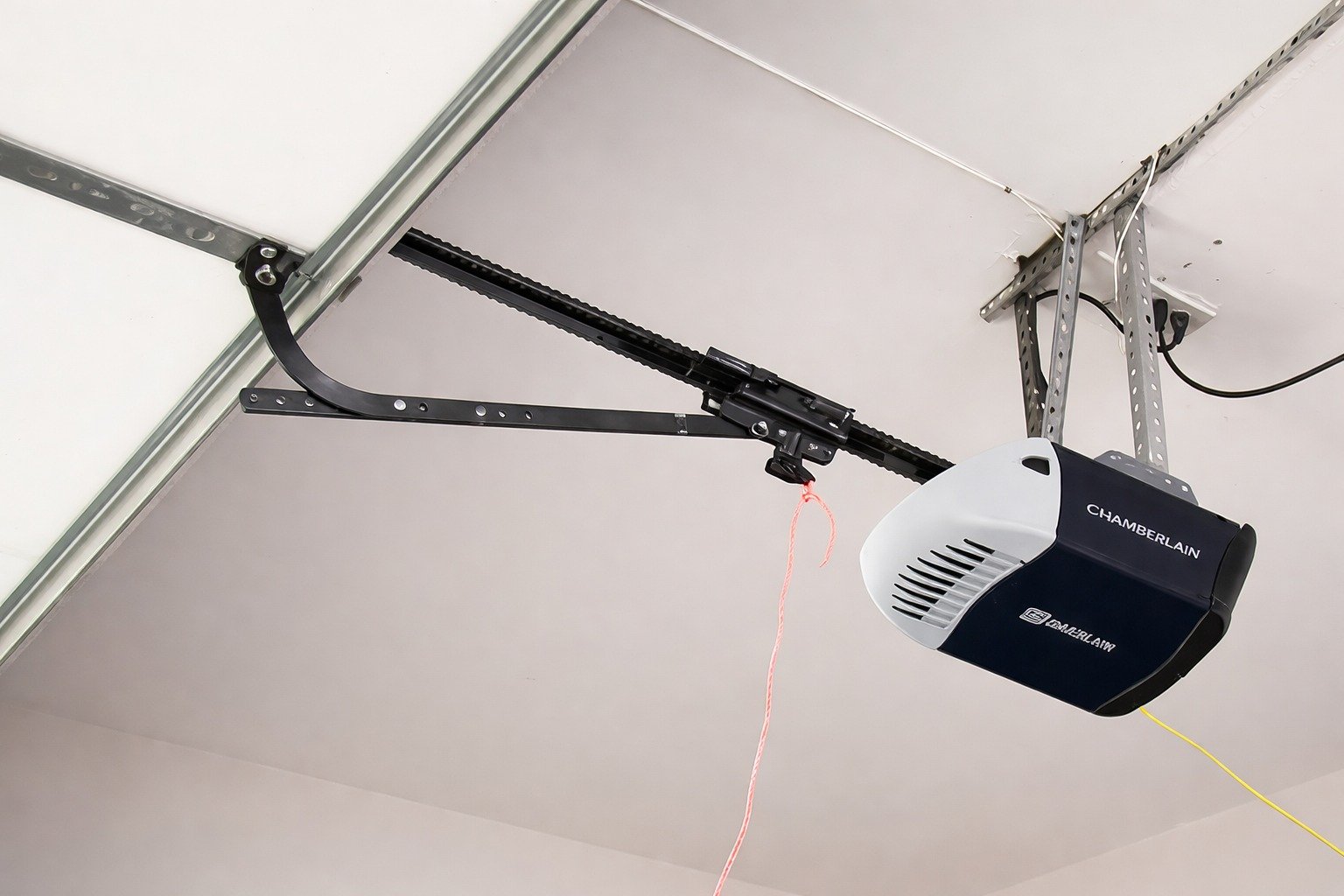
We cycle the door by hand and under power, check the balance with the opener disconnected, and find the part that has actually failed rather than the one that is easiest to replace.
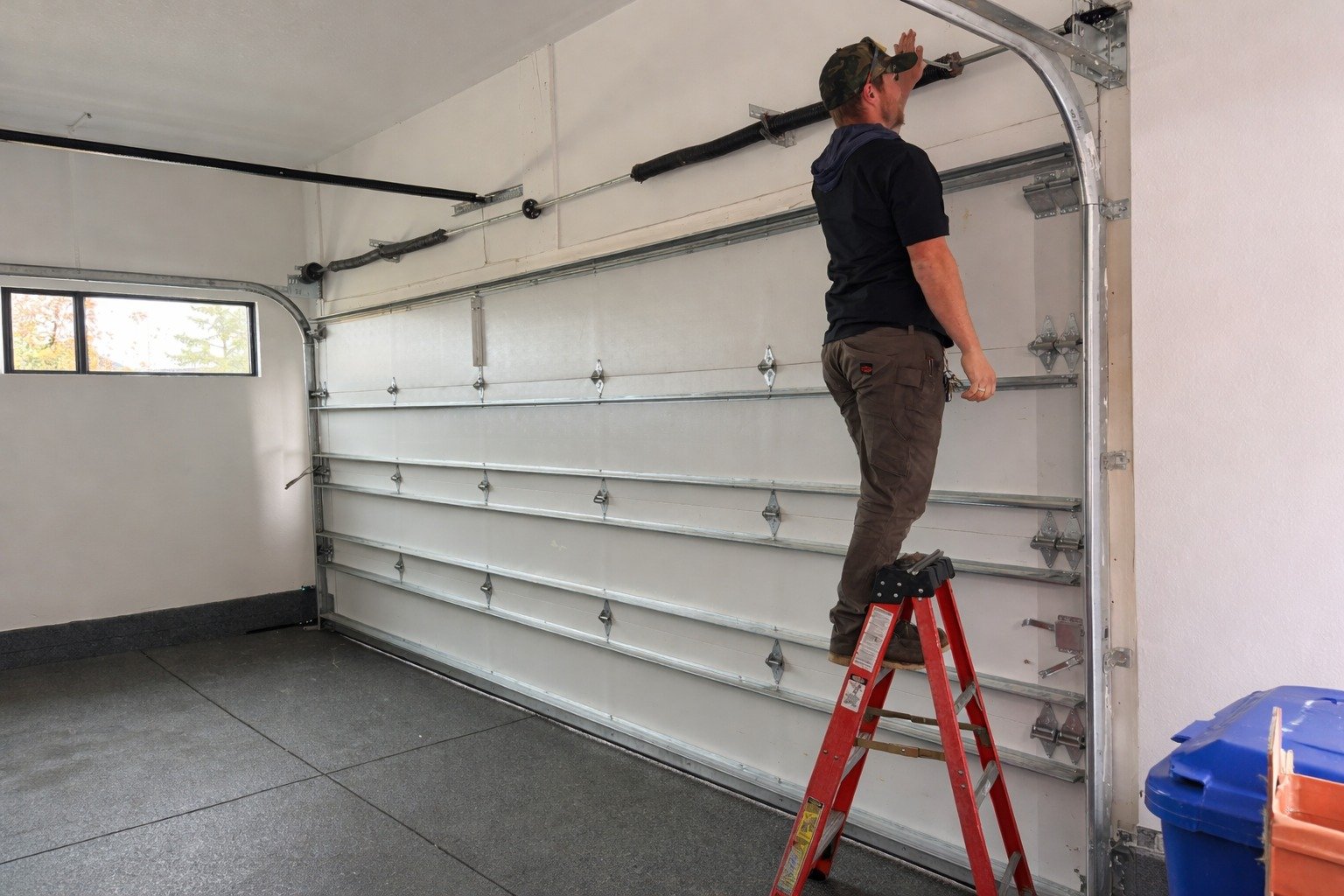
The cheapest visit we make. A serviced door outlasts a neglected one by years, and almost everything we get called out to was preventable.
Almost every emergency we attend gave warning first. A spring near the end of its cycle life, a cable fraying at the drum, a roller that has started to drag — all of them are visible to somebody who knows where to look, and all of them are cheap to deal with before they fail rather than after.
We recommend twice a year in Connecticut rather than annually, and the timing matters: once going into winter so the door is not fighting the cold, and once coming out of it to get the winter’s road salt off the bottom section before it sits there all summer. A door that is balanced, correctly lubricated and has working safety reverses will simply last longer.
Our technicians cover Orange and the surrounding Connecticut communities daily, so we can usually be on site the same day you call.
Orange is inland in New Haven County, which spares your door the constant salt-air exposure that shoreline properties deal with. What it does not spare you is winter. Road brine comes home on the car and dries on the bottom section and track every time you park, and the freeze-thaw swing through a Greater New Haven winter works fasteners loose and stiffens every moving part in the system.
Connecticut's freeze-thaw cycle is what a door in Orange really has to survive. Steel torsion springs get brittle as the temperature drops, so a spring already near the end of its cycle life almost always lets go on a cold morning rather than a mild one. The same swing moves the slab and jamb just enough that a door which sealed cleanly in October can be showing daylight down one side by February.
Our busiest stretch in Orange runs from the first hard freeze through to the spring thaw. A door that is noisy or slow in November is a door that breaks in January, so a pre-winter check is worth far more here than an emergency call-out in the cold.
Every visit runs the same way regardless of what prompted it, so we are not treating one symptom and calling it a service.
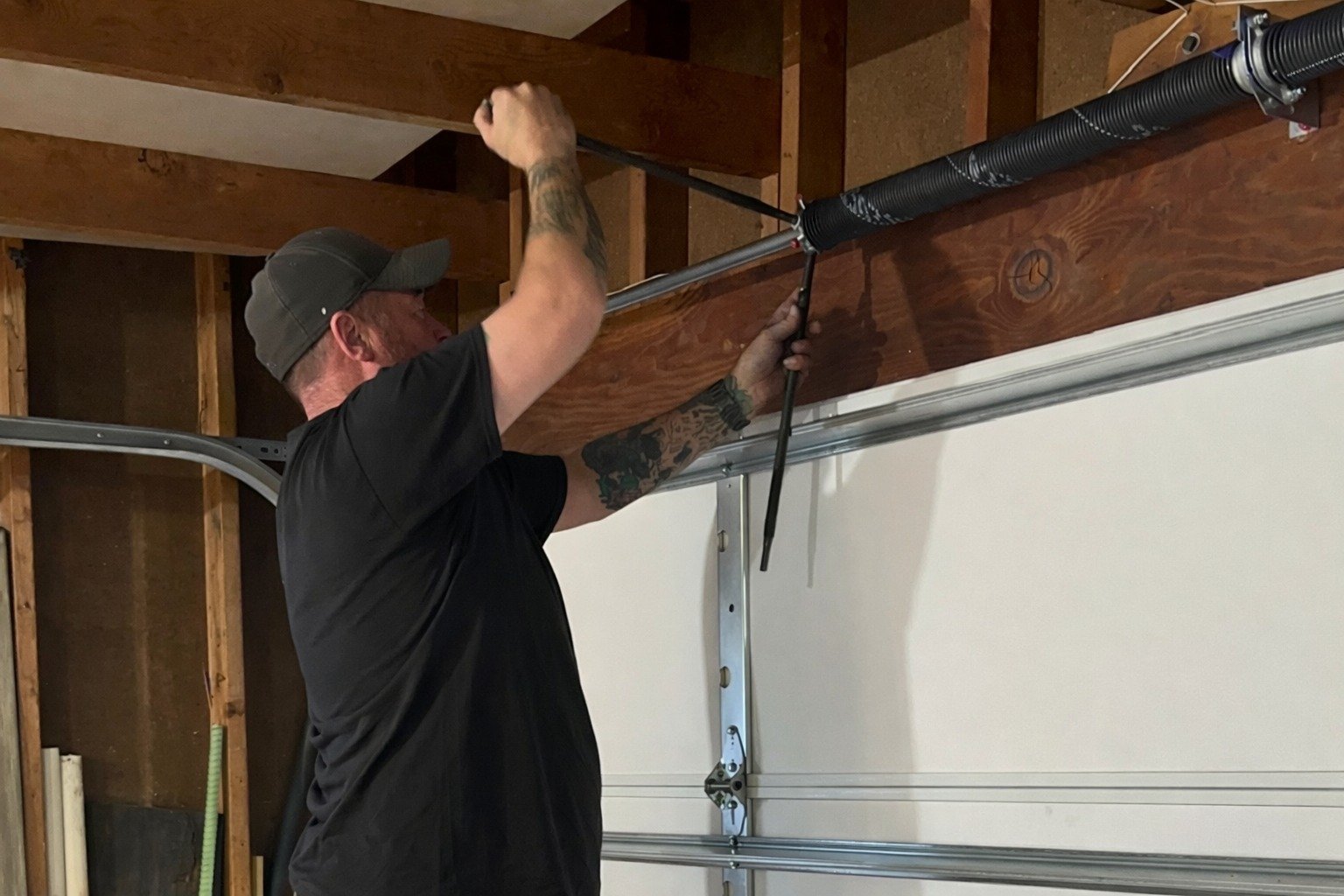
Springs inspected for gaps, rust and fatigue, and the door balance checked by hand with the opener disconnected. A door that will not hold itself half-open is already telling you the springs are going.
The opener checked end to end: travel and force limits, both safety reverses, the drive gear, and the battery backup if one is fitted. Force limits set too high are a genuine safety issue, and they are common.
Cables checked along their length and at the drums, where fraying starts and where it is hardest to see. Anything suspect gets flagged with an honest estimate of how long it has left.
Tracks cleaned and checked for alignment. Tracks get cleaned, never lubricated — rollers are meant to roll along them, and a greased track just collects grit and turns it into a grinding paste.
Rollers, hinges, spring coils and end bearings lubricated with a light lithium or silicone product. Heavy grease is the wrong choice here: it stiffens in the cold and makes a winter door drag.
Every hinge, bracket and track bolt checked and tightened, the bottom seal inspected, and the sections looked over for rust starting at the bottom where the salt sits.
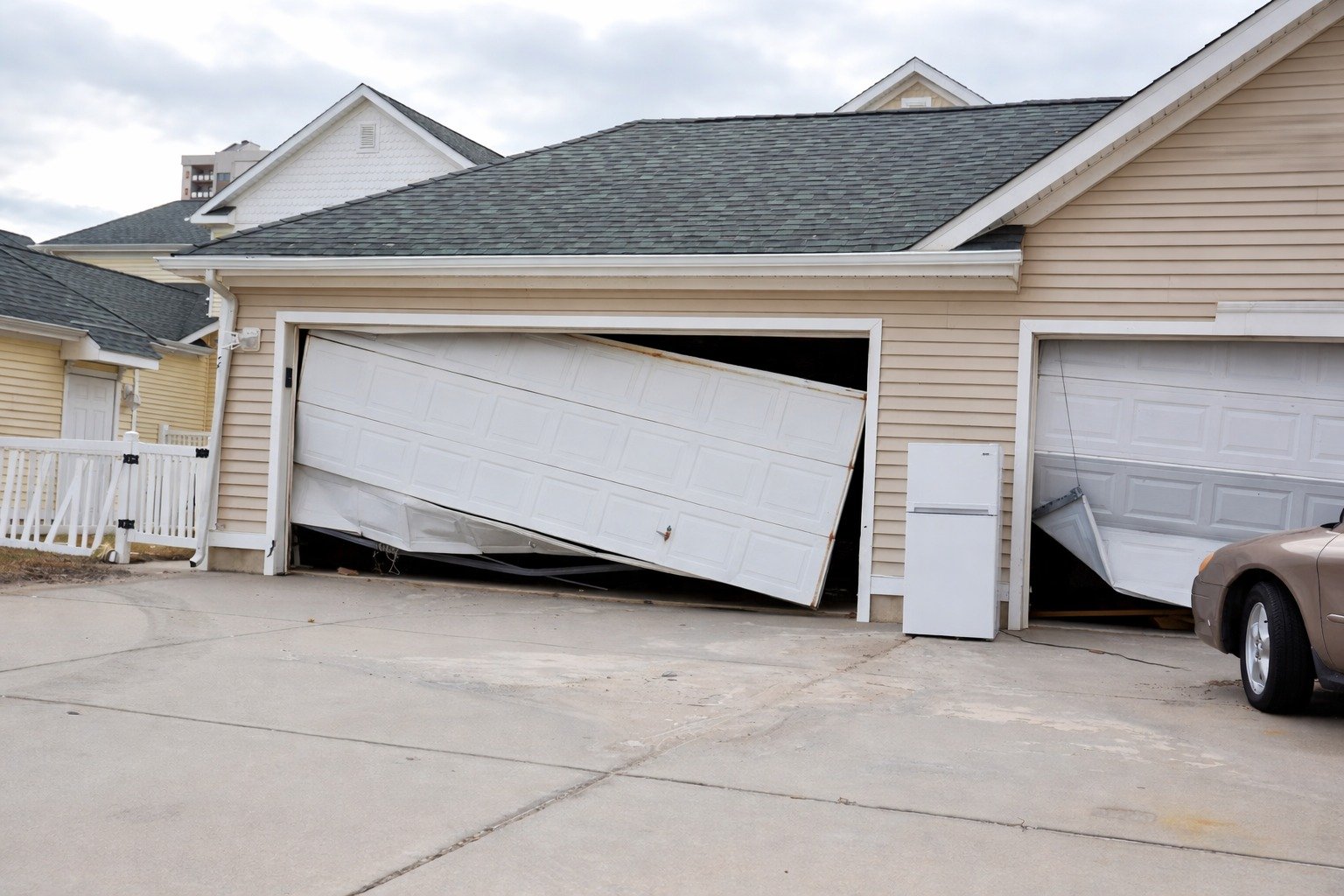
The faults we attend most in Orange. None of them fix themselves, and every one of them is cheaper to deal with before it fails completely than after.
Describe the fault in your own words and we will come back with a time. The inspection is free, the price is fixed before work starts, and you are under no obligation.
Trusted by 3,995+ Connecticut homeowners across 74 cities.
We follow a simple, efficient process to deliver fast, reliable garage door solutions with zero hassle from start to finish.
We cycle the door by hand and under power, check the balance with the opener disconnected, and find the part that has actually failed rather than the one that is easiest to replace.
We explain what we found in plain terms, what it needs now and what can wait, and give you a fixed price before anything starts. Decide against it and the inspection still costs you nothing.
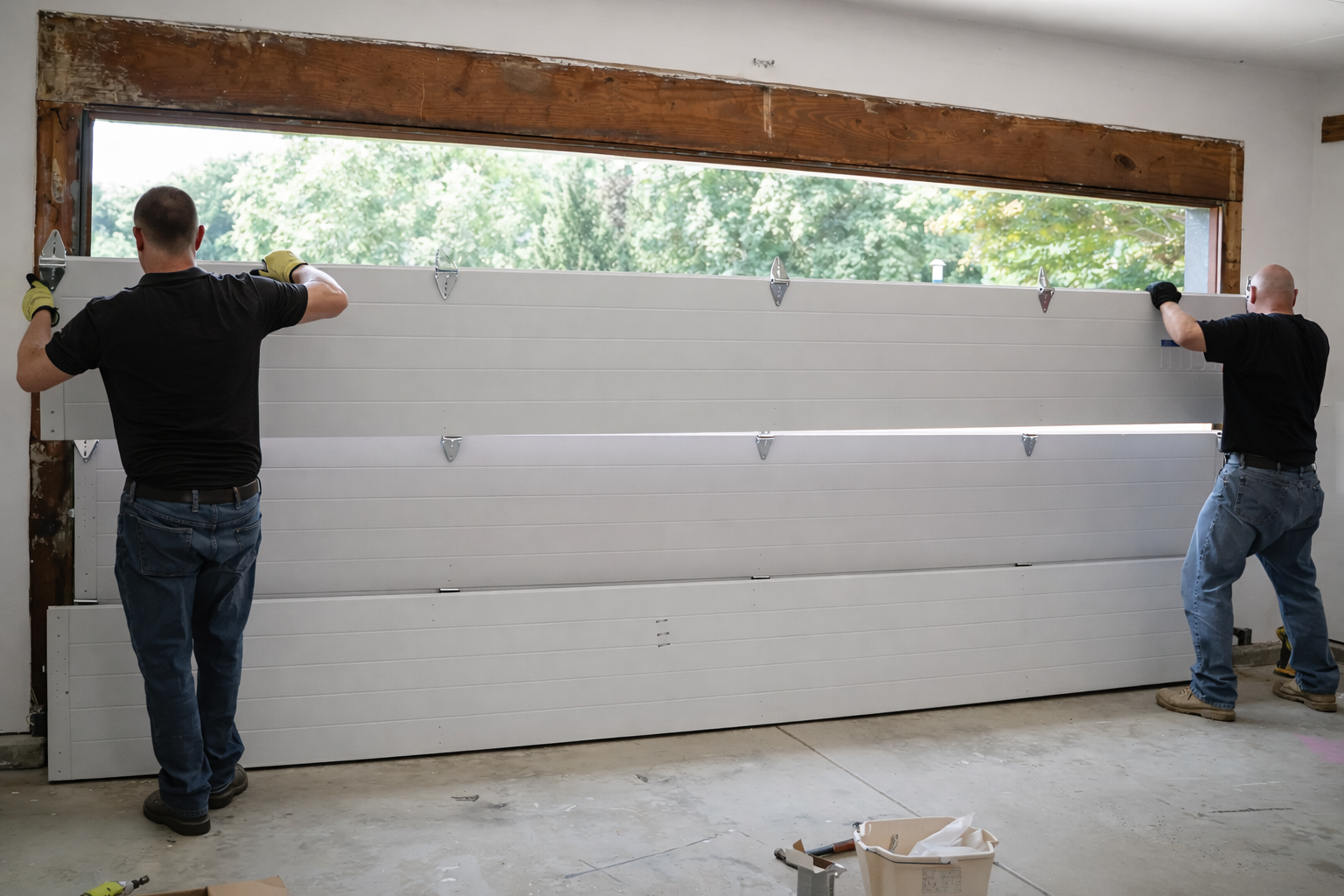
We do the work with parts sized to your door, rebalance it, and test both safety reverses in front of you. Most jobs finish on the first visit because the van carries what usually fails.







All 74 towns, across all eight counties. Pick yours for local availability, response times and pricing.
The questions we get asked on the phone most often, answered the way we would answer them there.
Twice a year here. The freeze-thaw swing and winter road salt do more to a door in Connecticut than a mild climate does, and an annual service leaves too long a gap through the hardest months.
A hand balance test, full lubrication, every fixing checked and tightened, cables and drums inspected, both safety reverses tested, and the seals checked all the way round. You get told what we found, including anything that is worn but not yet urgent.
Usually, yes. Springs and cables give warning before they fail, and catching a fraying cable during a service is a fraction of the cost of the emergency call after it snaps.
Around an hour for a single door. Longer if we find something that needs attention, and we will always ask before doing extra work.
Yes. Commercial and residential doors run on the same principles, and we service both — including higher-cycle doors that need looking at more often than a domestic one.
Whatever your door needs, the same trained team handles it — often on the same visit.